What is AI search? A plain-English guide for small business owners
Part of the complete guide to AI searchability.
"AI search" gets used a lot and explained rarely. If you run a small business, you don't need the technical version; you need to know what's changing in how customers find you, and whether it affects you. This is that explanation, in plain terms.
No jargon, no acronyms, just what's actually happening, why it's different from what came before, and why it's worth a few minutes of your attention. Once you have the idea, the complete guide to AI search covers the whole playbook.
The simple definition
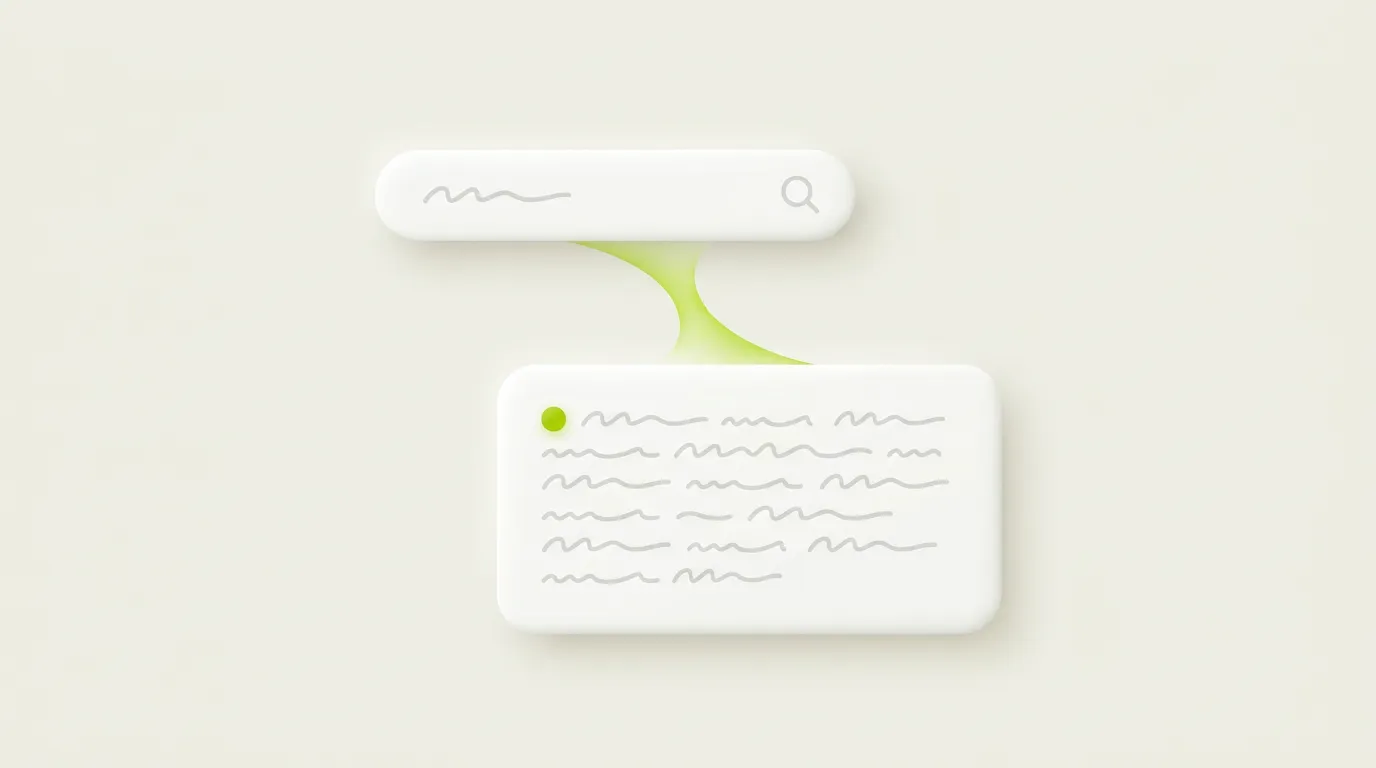
AI search is what happens when someone asks a question to an assistant like ChatGPT, Gemini or Claude and gets a written answer back, instead of typing keywords into a search engine and scanning a page of links. The assistant reads the web on their behalf and hands them a conclusion.
For a local business, the relevant version is simple: instead of searching "physio near me" and comparing listings, a customer asks "who's the best physio near me for a running injury?" and gets a short, reasoned recommendation with a few names. The work of choosing has been done for them.
How it's different from a search engine
A search engine points you to sources and leaves the judging to you. An assistant does the judging and gives you the result. One hands you a menu; the other hands you a dish and tells you why you'll like it.
That changes the stakes. On a search page, dozens of businesses get a chance to be seen. In an assistant's answer, only the few it names get mentioned at all, and they arrive with the assistant's implied stamp of approval, which customers tend to accept rather than question.
What AI search looks like for local businesses
Picture the questions your own customers ask when they don't yet know who to choose: the best in the area, who to trust for a particular need, somewhere good for an occasion, a reliable name for an urgent job. Increasingly those questions are typed into an assistant, and answered with specific businesses.
If your name is one of the answers, that's a warm introduction you didn't have to pay for. If it isn't, the customer never learns you exist, no matter how good you are, because they never see the list of everyone who wasn't named.
Where the answers come from
It helps to know that an assistant isn't inventing its recommendations or expressing a personal taste. It's summarising what the wider web already says about local businesses, the directories, reviews and clear pages it can read, and turning that into a confident answer. It reflects your reputation rather than creating it.
That's reassuring in one way and demanding in another. Reassuring, because there's no mysterious algorithm to please and no ads to buy. Demanding, because your visibility depends on what the open web says about you, which you influence over time rather than switch on, much like your reviews.
Why it matters more for small businesses
Large brands have so much of the web talking about them that assistants can't miss them. Small local businesses live or die on a much thinner footprint, which makes them far more sensitive to whether the web presents them clearly. A few missing listings or a quiet review presence can be the difference between being named and being skipped.
It cuts both ways. Because this space is new, a small business that takes it seriously can become an assistant's go-to name in its category and area long before larger, slower competitors react. Being small is not the disadvantage here; being unclear or absent is.
Where AI search is heading
The direction is toward answers, not links. As assistants get better and more people trust them, more decisions, especially quick, local, everyday ones, will be made inside a conversation with an assistant rather than on a results page. That doesn't erase traditional search overnight, but it steadily changes where discovery happens.
The businesses that treat AI visibility as something to measure and manage, the way they already do with search and reviews, will be the ones that adapt smoothly rather than scrambling later, once being named is table stakes rather than an edge.
How to find out where you stand
Understanding AI search is useful; knowing your own place in it is what actually helps. The practical move is to see what the assistants say when someone asks for your category, rather than assuming they've got you covered.
A free Peekl check does exactly that: it asks the questions your customers ask, across ChatGPT, Gemini and Claude, and shows you whether you're being recommended today. Once you've seen where you stand, AI search versus Google explains how this fits alongside the search visibility you already work on.
Common questions
Is AI search the same as SEO?
Do I need to be technical to deal with AI search?
Is this just hype that will blow over?
See where you stand
Reading about AI search is useful; knowing your own place in it is what helps. A free Peekl check asks the assistants the questions your customers ask and shows whether ChatGPT, Gemini and Claude recommend you today, who they name instead, and how often.